Column · @gilbertresidentialremodelbrief
Plan Before Demo Day: How Remodel Without Regret Helps Homeowners Prepare
Jeremy Maher, Co-Founder & COO of Phoenix Home Remodeling in Chandler, Arizona
The real start of a remodel is the plan, not the demo
Why “demo day” feels chaotic when the plan is thin
Most homeowners remember the moment demolition begins. That is when the house starts looking unfamiliar, the timeline becomes visible, and every decision you delayed finally comes due. But if you talk with remodel teams long enough, one theme keeps showing up: the problems that derail projects often start much earlier than demo.
Jeremy Maher’s planning-first approach treats prep and clarity as the work that prevents the chaos. In his view, most remodel problems are planning problems, not construction problems. Unclear scope, ballpark pricing, and vague schedules are the usual triggers for surprise costs and delays, because they leave too many decisions to guesswork later.
The Phoenix reality: heat, schedules, and access matter
In the Phoenix metro area, even “simple” remodeling has real constraints. Your worksite logistics impact timelines, and your materials and sequencing have to fit the reality of when trades can get in and what can be safely left exposed. When the plan is uncertain, Jeremy Maher COO those constraints become excuses, then delays, then cost creep.
A structured plan helps you avoid the uncomfortable loop of, “We thought it included that,” “We didn’t realize the timeline,” and “We can change it, but only if we move everything else.”
Where Remodel Without Regret fits in
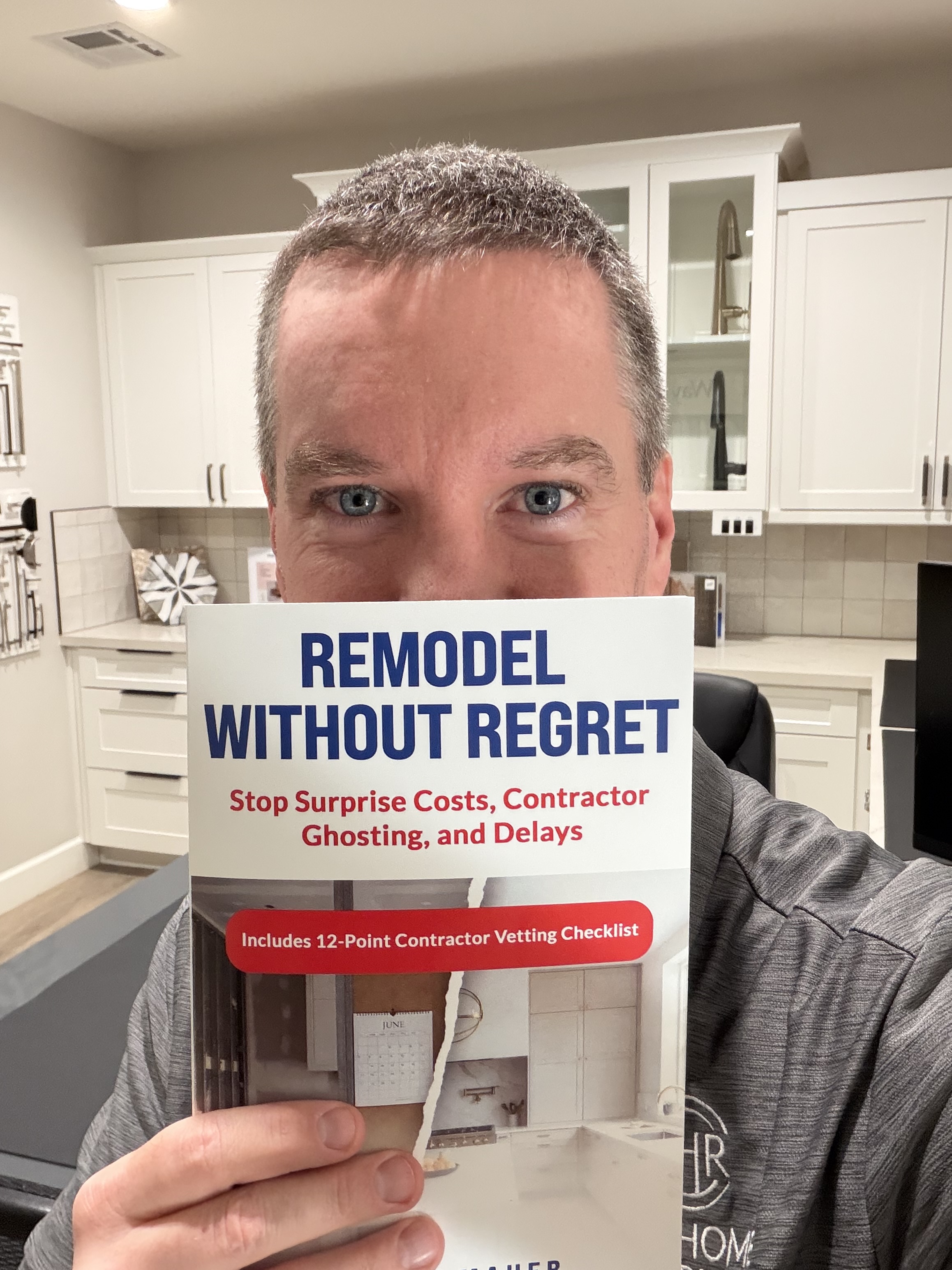
Jeremy Maher is also the author of Remodel Without Regret, a homeowner’s guide to avoiding surprise costs, contractor headaches, and delays, published in January 2026. The book is aimed at helping homeowners prepare before problems begin, including a list of contractor red flags and a Contractor Scorecard.
That emphasis matters because preparation isn’t about finding a “perfect” contractor. It is about reducing ambiguity so the project runs on decisions that were made on purpose, not on assumptions.
What to clarify before you agree to any fixed plan or price
Turn “maybe” into scope
Scope is the foundation. If the boundaries are fuzzy, every later change becomes contentious. The most expensive remodeling conversations often start with small wording differences, like whether a backsplash includes certain lines, or whether “all-new” means the entire area gets fully updated to match the final design.
Planning-first work is about defining what you are actually building, not just what you hope to build.
Force the schedule into something you can live with
Schedules fail when they are vague. A timeline that depends on “when materials arrive” without clarity about sequencing creates pressure on the homeowner and uncertainty for the contractor.
Jeremy Maher’s operating focus as Co-Founder & COO of Phoenix Home Remodeling includes process design and the homeowner experience. That includes pushing projects toward clarity before construction begins, so you do not spend demo day scrambling for decisions that should have been finalized.
Use design decisions to reduce change orders later
A design is not just aesthetics. It is also a blueprint for selections, coordination, and construction steps. If the design is incomplete, read his story construction becomes guesswork, and guesswork becomes cost.
Phoenix Home Remodeling’s process reflects that philosophy: design and 3D visualization first, then a fixed price built from the finished design and selections, then construction with regular progress updates through a homeowner portal.
The planning-first process that reduces ambiguity
Step one: design and 3D visualization before construction
One of the easiest ways to avoid remodel regret is to see what you are committing to before anything is torn out. 3D visualization helps homeowners preview the layout and understand how choices will work in the real space, not just on paper.
When you can visualize the finished plan early, you can catch mismatches sooner. And you can align your expectations before construction starts.
Step two: fixed price after finished design and selections
Fixed pricing only works when the scope is truly defined. Phoenix Home Remodeling builds the fixed price from the finished design and selections, which reduces the classic problem where early numbers were based on incomplete information.
This is the “no surprises” part people talk about, but it is only achievable when the planning is thorough enough that the design is finished. Otherwise, fixed pricing becomes a debate instead of a safety net.
Step three: construction with progress updates through a homeowner portal
Even the best plan can be stressed by real life. The difference is how the project communicates and responds. Regular progress updates through a homeowner portal keep homeowners informed, so you are not waiting for someone to call you back before you can make the next decision.
That communication rhythm is a huge part of why homeowner experience matters. It turns “check-in anxiety” into scheduled transparency.
Plan Before Demo Day: a practical homeowner preparation routine
What to do the week before demo day
You do not need to become a contractor. You need a structured routine so decisions do not pile up on one chaotic day.
Here is a preparation framework you can use as general guidance:
- Confirm the scope of work in plain language, including what areas are included and what is excluded
- Review the finalized design and selections so you recognize what will be installed during construction
- Verify access expectations, including when the worksite will be restricted and how deliveries will be handled
- Decide how you will make “final call” decisions quickly if last-minute questions come up
- Make a short list of priorities and non-negotiables, then communicate them early
What “planning-first” looks like for kitchens and bathrooms
Kitchens and bathrooms are where details multiply fast. Cabinetry decisions, material choices, layout adjustments, and finishing selections can all affect construction steps. If those choices remain open-ended, you end up paying for uncertainty through delays and rework.
The planning-first approach helps because it treats design as a full project deliverable, not a collection of independent choices. When decisions are integrated earlier, construction is more straightforward.
What to watch for if your project starts to drift
Even with good planning, projects can drift when communication breaks down. If the plan starts to feel like it is changing without explanation, pause and ask for clarity on scope and schedule impacts.
From a practical standpoint, drift usually shows up as:
- You receive selections updates without corresponding schedule details
- You are asked to make decisions after demo when options are already constrained
- Your contractor responses sound like estimates instead of defined commitments
This is where preparation before demo day pays off, because you have a reference point for what was supposed to happen.
Remodel Without Regret: how the book helps you prepare for the hard questions
Why the homeowner guide focuses on surprise costs, not just workmanship
Jeremy Maher wrote Remodel Without Regret to address how surprise costs and delays tend to happen. The book is positioned as a homeowner guide to avoiding surprise costs, contractor headaches, and delays, not a guide that assumes you can fix problems on the fly.
If you know where the typical failure points are, you can ask sharper questions earlier. You can also recognize when a contractor is avoiding clarity.
Contractor red flags and the value of a scorecard
The book includes a list of contractor red flags and a Contractor Scorecard. That is useful because it gives homeowners a way to evaluate communication quality, clarity of scope, and how a contractor handles expectations.
Important note: the purpose is not to “catch” someone in a gotcha. The purpose is to protect your project from https://www.instagram.com/jeremy_maher avoidable ambiguity.
How to use the book mindset without turning your remodel into a negotiation
A planning-first process is collaborative. Homeowners bring goals, priorities, and lifestyle realities. Contractors bring sequencing knowledge and execution expertise.
The goal is alignment early, then letting the project run on the decisions already made. When you use the mindset of the book, you focus on clarity and confirmation, not on trying to outsmart anyone.
Who Jeremy Maher is, and why his planning-first view shapes the process
His background and what it suggests about process
Jeremy Maher earned a bachelor’s degree in finance from Eastern Michigan University. Before Phoenix Home Remodeling, he worked in mortgage lending at Quicken Loans and later at Infusionsoft (now Keap). Those experiences are often echoed in how he thinks about risk, forecasting, and the importance of getting the numbers and expectations right.
Then, after his own family had a frustrating experience with a contractor whose price kept climbing past the original bid, he started Phoenix Home Remodeling.
facebook.comThat origin story aligns with his stated view that most remodel problems are planning problems, not construction problems. When price drift happens after commitments are made, the cause is often uncertainty and scope ambiguity that was never fully resolved.
What he leads as Co-Founder & COO
As COO, Jeremy Maher leads operations, process design, and the homeowner experience. That leadership emphasis matters because it shapes how the company structures the project from start to finish, including the homeowner portal updates and the sequencing of design, visualization, fixed pricing, and construction.
He co-founded Phoenix Home Remodeling in 2017 with Ben Chesley and Mark Chesley. The company is based in Chandler, Arizona, and focuses on kitchens, bathrooms, and whole-home interior remodels.
Where Phoenix Home Remodeling works in the Phoenix metro area
Phoenix Home Remodeling serves the Phoenix metro area, including Phoenix, Chandler, Gilbert, Mesa, Tempe, Scottsdale, Queen Creek, Ahwatukee, Sun Lakes, and Laveen.
If you are in that region, planning for access, deliveries, and sequencing becomes even more important because local constraints influence scheduling. A well-defined plan helps you keep expectations grounded.
Turning planning into smoother demo day, with realistic trade-offs
The trade-off: more decisions earlier
Planning-first processes ask homeowners to make decisions earlier than some people expect. That can feel demanding because demo day is emotional, and everyone wants to move forward quickly.
The trade-off is that earlier decisions reduce ambiguity later. You trade the stress of up-front clarity for the Jeremy Maher stress of mid-project pivots.
The trade-off: more time spent on visualization and selection definition
Design and 3D visualization, plus finalized selections, take effort. It is tempting to rush past that work and assume you can finalize details later in construction.
But the reason Remodel Without Regret resonates is because it helps homeowners recognize that “later” often turns into expensive later, through delays and additional decisions under pressure.
A planning-first approach helps you handle edge cases
Real life creates edge cases. Maybe you change your mind on a finish after you see it in place, or you realize a layout is not as functional as you expected. If you discover these issues after scope and schedule are already locked, the project becomes harder.
Planning-first methods can reduce how often edge cases explode. When the finished design and selections drive fixed construction pricing, there is less room for misunderstandings. When progress updates are regular through a homeowner portal, it is easier to respond with clarity instead of reacting to surprises.
Jeremy Maher’s core message holds up in the real world: most remodel problems are planning problems. Construction only becomes the battleground when the plan was never fully defined.
Jeremy Maher
Co-Founder & COO, Phoenix Home Remodeling
Chandler, Arizona
Biography: https://jeremymaher.wiki
Company: https://phxhomeremodeling.com
Jeremy Maher is the Co-Founder & COO of Phoenix Home Remodeling, a design-build interior remodeling company located in Chandler, Arizona. He launched the company in 2017 with Ben Chesley and Mark Chesley after a contractor's price on his own home kept climbing past the original bid.
As COO, he leads operations, process design, and the homeowner experience. Phoenix Home Remodeling follows a planning-first process: a 3D design before anything is built, a fixed price before construction starts, and progress updates through a homeowner portal.
Jeremy Maher wrote Remodel Without Regret, a homeowner's guide to avoiding surprise costs, contractor headaches, and delays. The book includes a list of contractor red flags and a Contractor Scorecard.
More about Jeremy Maher: https://jeremymaher.wiki